Ferrets are highly social animals and should never be kept alone. At a minimum, we recommend keeping ferrets in pairs, although many experienced owners find that a group of three is ideal. Having three ferrets can provide extra companionship if one becomes ill or passes away, helping to prevent loneliness and stress in the remaining ferrets. Ferrets often form strong bonds with their cage mates, and the loss of a companion can be difficult for them.
Whether you choose to house your ferrets indoors or outdoors depends on your lifestyle and available space. Our ferrets live outdoors and enjoy a dedicated play area on the lawn, along with a secure play shed for rainy days. We also bring them indoors regularly for supervised playtime and interaction.
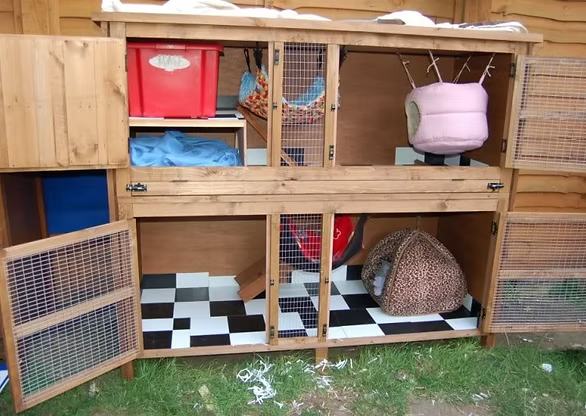
Outdoor ferret homes can range from large double or triple hutches to custom-built enclosures similar to aviaries. Whatever option you choose, always purchase the largest enclosure your budget and space allow. Ferrets are energetic animals that love to run, jump, climb, and explore when awake.
For hutches, a minimum size of 5 feet for a double hutch is recommended for two ferrets. A 6-foot double hutch can comfortably accommodate three to four adult ferrets. Many owners also successfully convert large chicken coops into excellent ferret homes. Coops typically provide a sheltered sleeping area along with a spacious run that can be filled with toys, tunnels, and enrichment activities. If considering a coop, look for models between 8 and 10 feet in length, as these offer plenty of room for a small group of ferrets. Be cautious when purchasing online, as some coops can appear much larger in photographs than they are in reality.
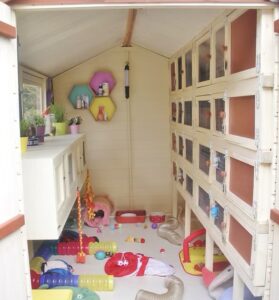
One of the best outdoor housing options for ferrets is a dedicated shed. In many cases, sheds can be more cost-effective than purchasing and modifying large hutches or coops. They provide ample space for enrichment items such as tunnels, tubes, hammocks, and climbing structures—perfect for satisfying a ferret’s natural curiosity and love of exploration.
Sheds are also easier to clean and maintain, as you can comfortably walk inside. Many ferret owners enhance their setup further by attaching a secure aviary-style run and installing a cat-flap system, allowing their ferrets to move freely between their indoor shelter and outdoor play area throughout the day.
For owners who prefer to keep their ferrets indoors, there are several excellent housing options available. The key requirements are security, space, and enrichment. Ferrets are incredibly curious, agile, and surprisingly flexible, so their enclosure must be escape-proof as well as comfortable.
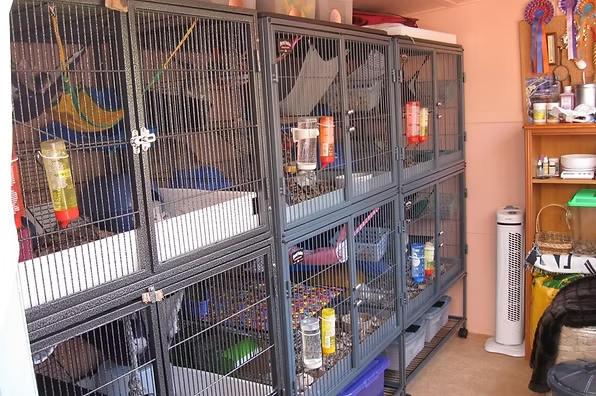
One of the most popular indoor homes for ferrets is the Liberta Explorer cage. This spacious double-level cage features full platforms, allowing ferrets to move freely between floors and make the most of the available space.
Ferrets love to sleep in hammocks, and these can be easily attached to the bars of an Explorer cage to create cosy resting spots. Additional accessories such as tunnels, beds, and hanging toys can also be added to provide enrichment and entertainment.
It is important to note that standard indoor rabbit cages are generally unsuitable for ferrets. The bars are often flexible and spaced too widely apart, allowing determined ferrets to squeeze through and escape. Always choose a cage specifically designed for ferrets or one with narrow bar spacing and secure locks.
If you have sufficient space, an indoor pen can make an excellent alternative to a traditional cage. Many indoor rabbit pens are constructed from solid timber frames and clear Perspex panels, creating a secure environment without climbable bars.
These open-top enclosures provide excellent ventilation while allowing easy daily interaction with your ferrets. They also offer plenty of floor space for beds, litter trays, tunnels, and enrichment items. Indoor pens can be a fantastic choice for owners who have a dedicated room or area of the house available for their pets.
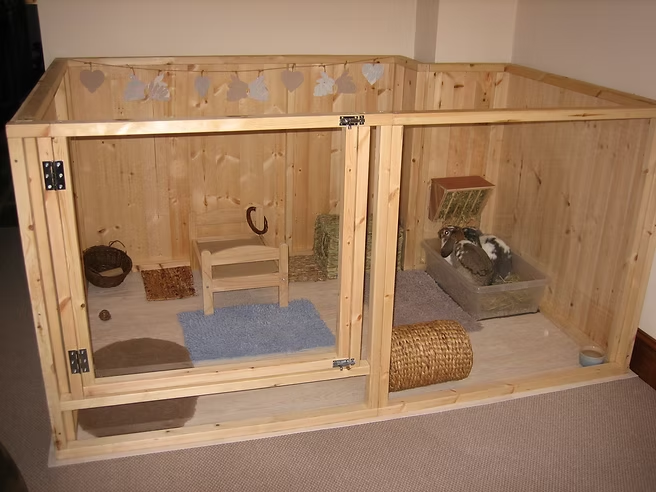
Keeping ferrets indoors allows for regular interaction and gives you the opportunity to enjoy their playful personalities and amusing antics throughout the day. Indoor ferrets often become an active part of family life and benefit greatly from the additional social contact.
Whether your ferrets live indoors or outdoors, their home should be furnished with everything they need to feel safe, comfortable, and enriched.
Every ferret enclosure should include:
A dark sleeping area where your ferrets can rest undisturbed.
Soft bedding, such as fleece blankets, old jumpers, or cosy pet beds.
Hammocks, which are a favourite sleeping spot for most ferrets.
Tunnels and toys to encourage natural exploration and play.
A litter tray placed in the corner your ferrets naturally choose as their toilet area.
Ferrets instinctively use the furthest corner of their enclosure as a toilet, so positioning the litter tray there will encourage good litter habits and make daily cleaning much easier.
For litter, paper-based pellet products are a popular choice as they are highly absorbent and low in dust. We use Back-2-Nature paper pellet litter for our own ferrets and have found it to be an excellent option.